
AUJI Ayurveda blog
Diet for Piles and Constipation: What to Eat and What to Avoid (Indian Food List)

Last updated: 21 November 2026 · By the AUJI Ayurveda team · General information, not medical advice.
The best diet for piles and constipation is high in fibre, has plenty of water, and is low in maida, fried food and alcohol. Fibre makes stools soft and bulky, so they pass without straining. Straining is the main thing that makes piles worse. Most adults should aim for about 25–30 grams of fibre a day, but many Indian diets based on white rice and maida give much less.
Why food matters so much for piles
When stools are hard and dry, you push harder on the toilet. That pressure swells the veins in the back passage. Soft stools that pass easily take pressure off those veins, which lets small piles settle and stops new ones forming. Medical guidelines recommend fibre as the first step for almost everyone with piles.
Foods to eat more of
Vegetables
- Leafy greens: palak (spinach), methi, sarson, amaranth
- Lauki (bottle gourd), turai (ridge gourd), tinda, pumpkin
- Carrot, beetroot, beans, peas, bhindi
- Cabbage, cauliflower and broccoli (start small if they give you gas)
Fruit
- Papaya: soft and easy on the stomach
- Guava, pear and apple, eaten with the skin
- Banana (ripe), orange and mosambi (eat the pulp, not only the juice)
- Figs (anjeer) and prunes soaked overnight
Grains and pulses
- Whole wheat or multigrain atta in place of maida
- Jowar, bajra, ragi and oats
- Brown rice or hand-pounded rice, or mix them with white rice
- Dal, rajma, chana, moong and other pulses (soak well and cook soft)
Seeds and other fibre
- Isabgol (psyllium husk): 1–2 teaspoons in a glass of water or buttermilk, usually at night. One of the best-studied fibre supplements for piles.
- Ground flaxseed (alsi) and chia seeds, a teaspoon a day
Fluids
- 8–10 glasses of water a day, more in summer or if you sweat a lot
- Buttermilk (chaas), which Ayurveda values for piles
- Coconut water, clear soups and dal water
Foods to limit or avoid
- Maida foods: white bread, pav, naan, biscuits, noodles and bakery items
- Fried snacks: samosa, bhajiya, namkeen and chips
- Very spicy food: it does not cause piles, but it can increase burning and itching for some people
- Too much tea or coffee and alcohol: they can dry you out
- Red and processed meat in large amounts
- Too much cheese and paneer if they make you constipated
- Junk food and fizzy drinks
A sample one-day meal plan
- Early morning: 1–2 glasses of warm water. 2 soaked figs or a few soaked raisins.
- Breakfast: vegetable poha or oats upma, or 2 multigrain rotis with sabzi, plus a bowl of papaya.
- Mid-morning: a guava or a pear, and water.
- Lunch: 2 whole wheat or jowar rotis, a bowl of dal, a green sabzi, salad (cucumber, carrot, tomato), and a glass of buttermilk.
- Evening: roasted chana or a handful of makhana, and a cup of green or herbal tea.
- Dinner (light, 2–3 hours before bed): moong dal khichdi with vegetables, or vegetable soup with a roti.
- Bedtime: 1–2 teaspoons of isabgol in a glass of water or warm milk.
Increase fibre slowly over 1–2 weeks. A sudden jump can cause gas and bloating. Drink more water as you add fibre.
The Ayurvedic view of diet for piles
Ayurveda links piles (Arsha) to weak digestion and constipation. It advises warm, freshly cooked, easy-to-digest meals at regular times, and not eating late at night. Buttermilk, ghee in small amounts, moong dal, and fruits like papaya are traditionally favoured. Haritaki (harde), often taken as Triphala, is a classical herb used to support regular bowel movements.
Daily habits that work with your diet
- Go to the toilet when you feel the urge. Do not hold it.
- Do not sit on the toilet for more than 3–5 minutes, and leave the phone outside.
- Raise your feet on a small stool while on a western toilet.
- Walk for 30 minutes a day.
- Take a warm sitz bath for 10–15 minutes if you have pain or itching.
Where AUJI Pilex fits
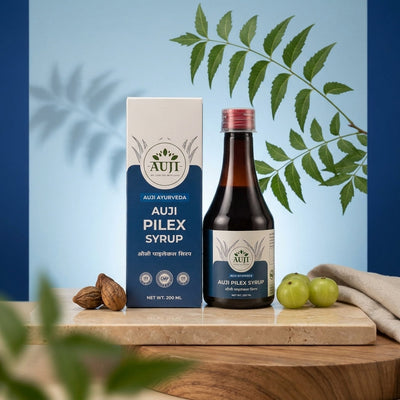
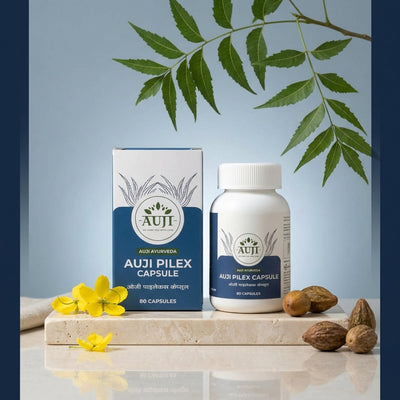
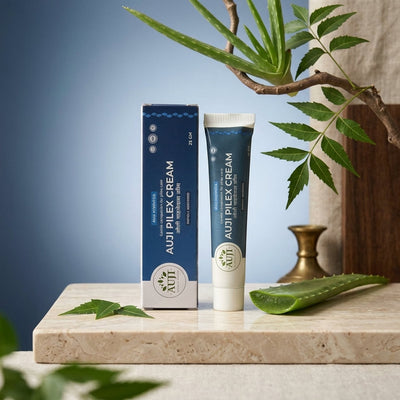
AUJI Pilex Syrup combines Haritaki, Amla, Niranjan phal, Daruharidra and Neem, herbs traditionally used to support digestion and regular bowel movement. It is made under AYUSH licence GA/1455 and works best alongside the diet changes above. It does not replace a doctor's treatment. If you have bleeding, a lump that does not go back, or severe pain, see a doctor first. Read more in our complete guide to piles.
Frequently asked questions
Is curd good for piles?
Plain curd and buttermilk are usually fine and many people find them soothing. Buttermilk is lighter and is traditionally preferred in Ayurveda.
Is banana good for piles?
Ripe bananas are generally helpful because they are soft and contain fibre. Unripe (green) bananas can be binding for some people.
Is rice bad for piles?
White rice is low in fibre, so a lot of it can add to constipation. You do not need to stop rice. Eat it with dal and vegetables, or mix in brown or hand-pounded rice.
How quickly does a high-fibre diet help?
Most people notice softer stools within a few days to two weeks, as long as they also drink enough water.
Sources
- Hawkins AT et al. The American Society of Colon and Rectal Surgeons Clinical Practice Guidelines for the Management of Hemorrhoids. Diseases of the Colon & Rectum, 2024.
- Alonso-Coello P et al. Fiber for the treatment of hemorrhoids complications: a systematic review and meta-analysis. American Journal of Gastroenterology, 2006.
- Indian Council of Medical Research – National Institute of Nutrition. Dietary Guidelines for Indians, 2024.
This article is general information, not medical advice. Results may vary. Consult a doctor before use.
Keep reading
-
Lower Back Pain: Common Causes, 5 Gentle Exercises and Warning Signs
Read the article: Lower Back Pain: Common Causes, 5 Gentle Exercises and Warning Signs -

Why Joints Hurt More in Winter, and 10 Ways to Ease the Stiffness
Read the article: Why Joints Hurt More in Winter, and 10 Ways to Ease the Stiffness -

Ear Infection in Adults: Symptoms, Causes, Treatment and When to See a Doctor
Read the article: Ear Infection in Adults: Symptoms, Causes, Treatment and When to See a Doctor


